


Information Architecture: Global Navigation Models
As Senior Manager, Experience Design
Sage.com is home to more than 40 products in 27 markets and is accessed by millions of visitors every year.

The Context
Product ‘findability’ (finding the right product for you) is a key issue for Sage, from an e-commerce and a user experience perspective.
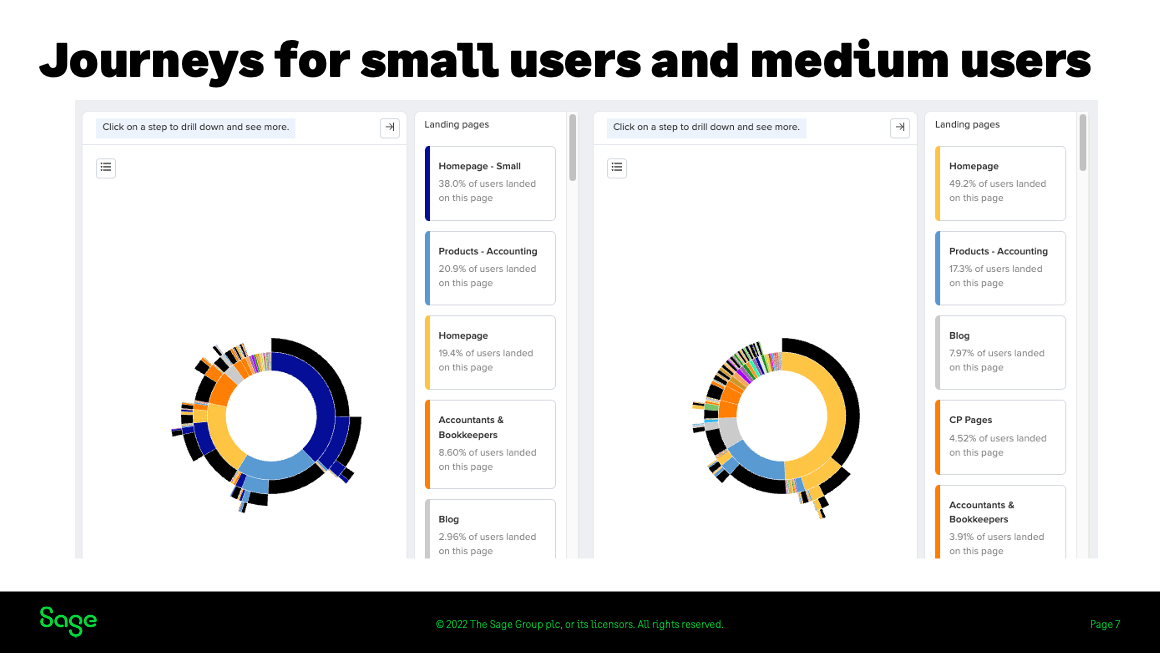
Research showed 30% of users who visit any page interact with the global navigation, so improvements in IA has a high potential to decrease journey times, and in turn increase e-commerce conversion.
The Opportunity
Research showed that around 30% of users use the global navigation, so any improvements had a high potential to improve performance and e-commerce conversion.
During the rollout of the new global brand (which came with its own ‘brand architecture’), we had an opportunity to explore different global navigation models and test for performance.
Information Architecture: Global Navigation Models
As Senior Manager, Experience Design at Sage
Sage.com is home to more than 40 products in 27 markets and is accessed by millions of visitors every year.
The Context
Product ‘findability’ (finding the right product for you) is a key issue for Sage, from an e-commerce and a user experience perspective.
Research showed 30% of users who visit any page interact with the global navigation, so improvements in IA has a high potential to decrease journey times, and in turn increase e-commerce conversion.
The Opportunity
Research showed that around 30% of users use the global navigation, so any improvements to global IA had a high potential to improve performance and e-commerce conversion.
During the rollout of the new global brand (which came with its own ‘brand architecture’), we had an opportunity to explore different global navigation models and test for performance.
My Role
- I reviewed all past research and data on product findability to ensure past learnings were brought into the process.
- I presented the case and achieved approval of a global navigation project from executive leadership.
- I conducted 16 stakeholder interviews that resulted in 3 unique perspectives from which to look at global navigation, labelled as ‘’Brand’, ‘Evergreen’ and ‘E-commerce’ models.
- I developed a comprehensive and inclusive set of tasks to test for, based on the principal user personas and desired business outcomes for stakeholders—for example, content access, product identification or support.
- I partnered with Content Designers and SEO to produce realistic navigation labels for each of the 3 navigation models, to submit to tree testing against the existing global navigation.
- I produced 3 new complete IA navigation trees, identifying successful task completion criteria as well as preferred navigation paths, to be measured during testing
- I partnered with the Research team to conduct tree testing of 1 existing and 3 new navigation models.
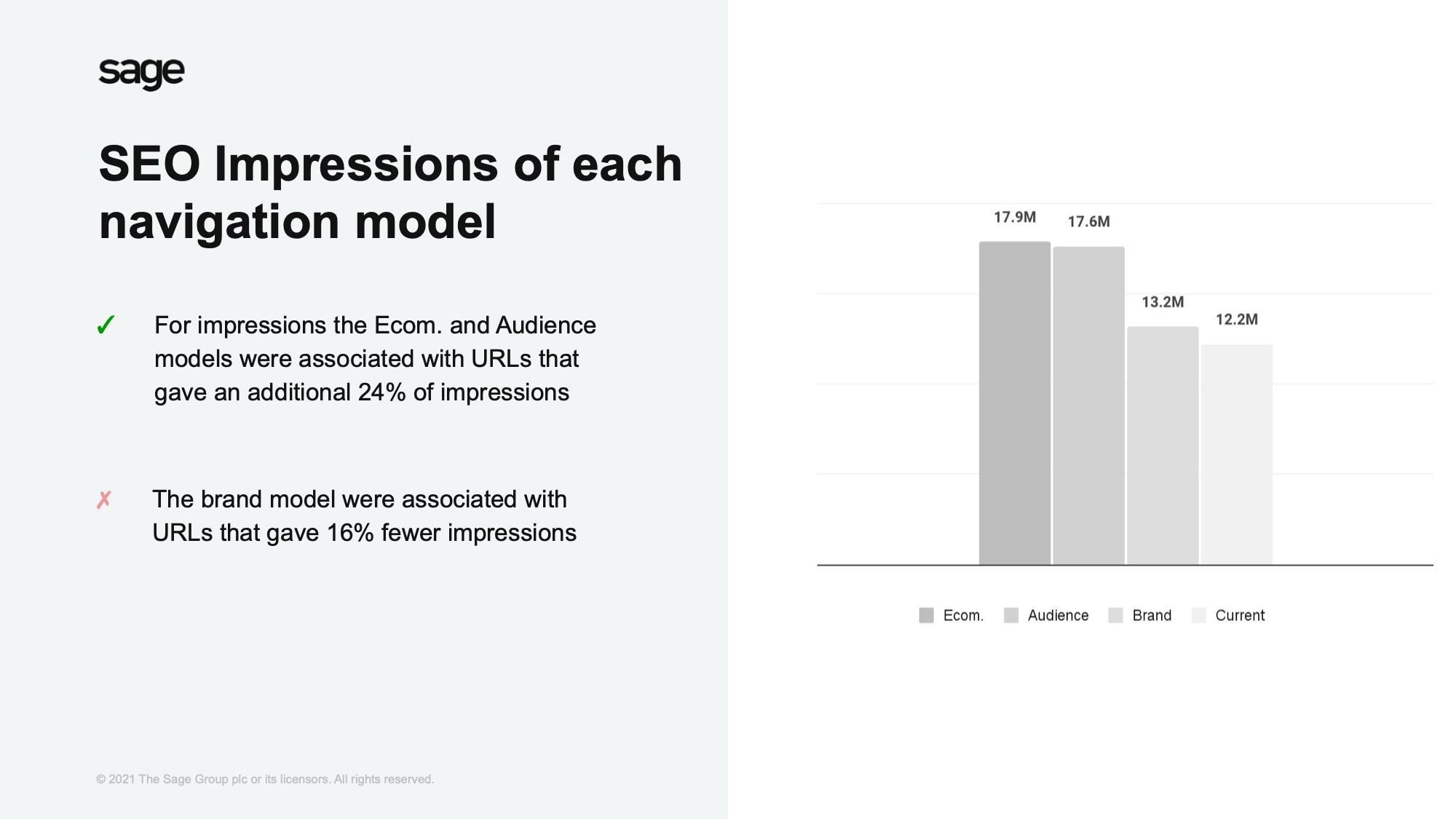
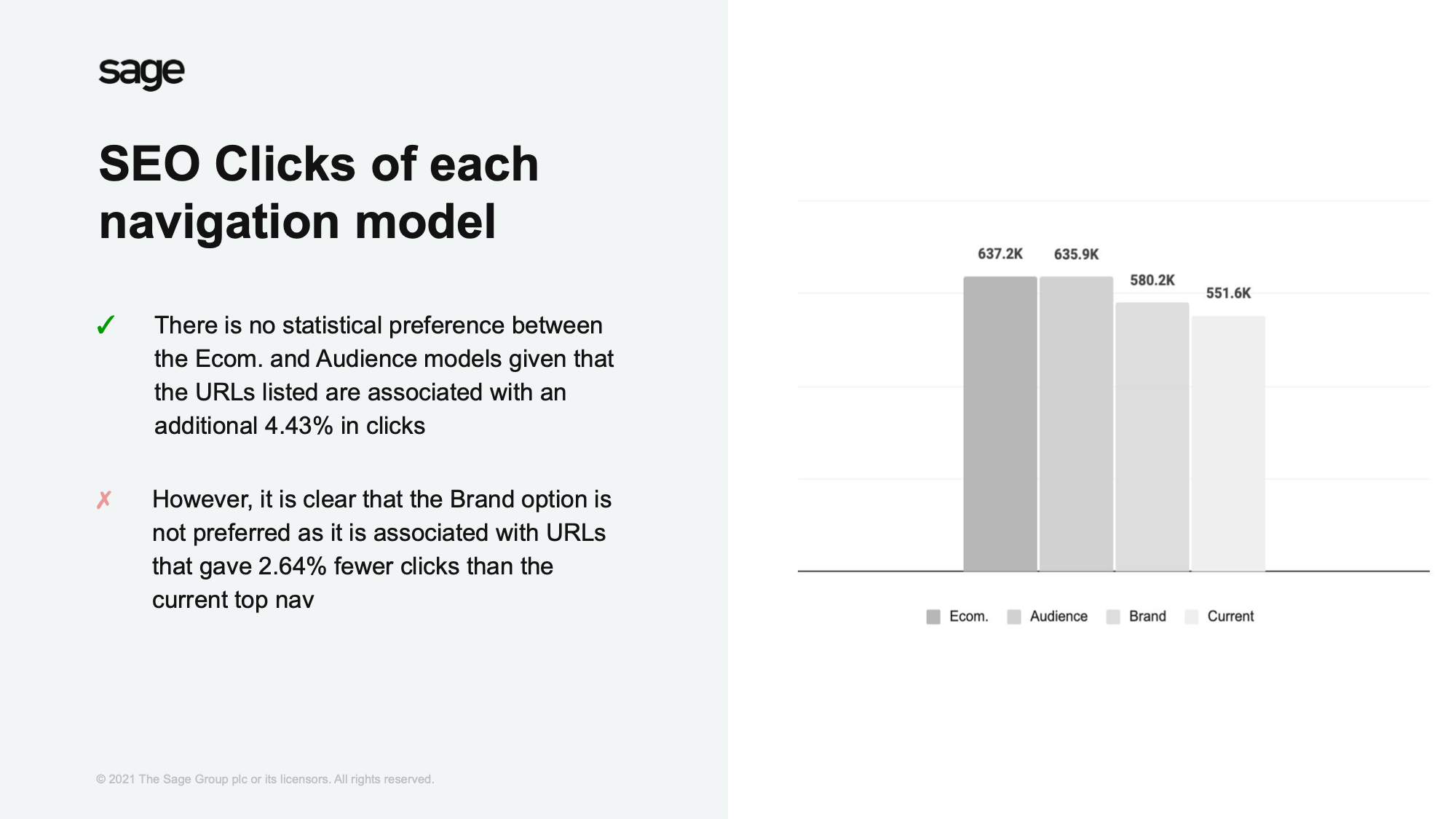
- I partnered with SEO to conduct impression and click testing of all three models
- I conducted in-depth analysis of test results, identifying the key wins, insights and challenges
- I produced comprehensive documentation and an executive summary which highlighted the principal insights and recommendations, with one model as the clear preferred path.
Results and Impact
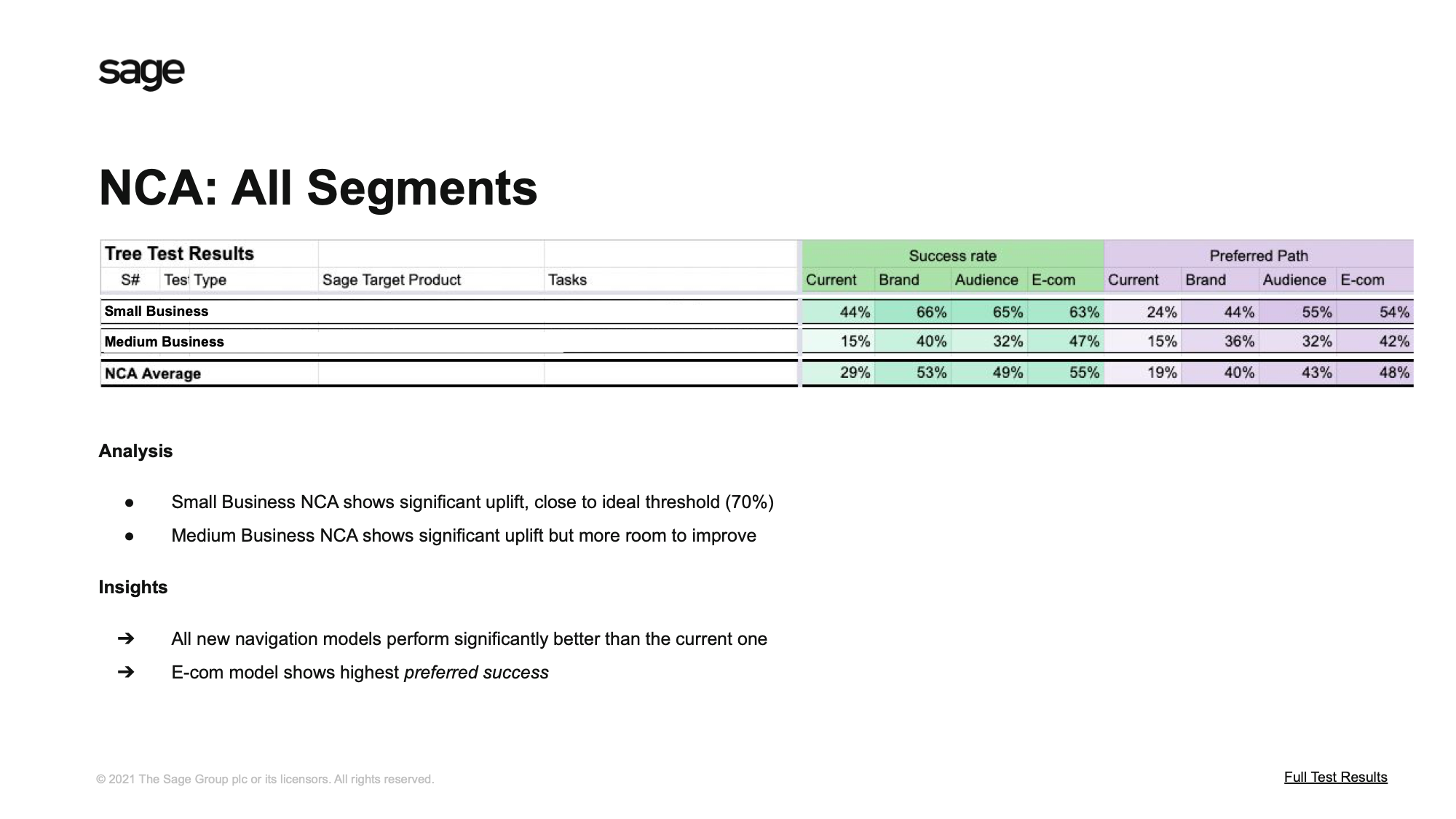
- All 3 new navigation models performed better than the existing one – up to 90% uplift in successful task completion
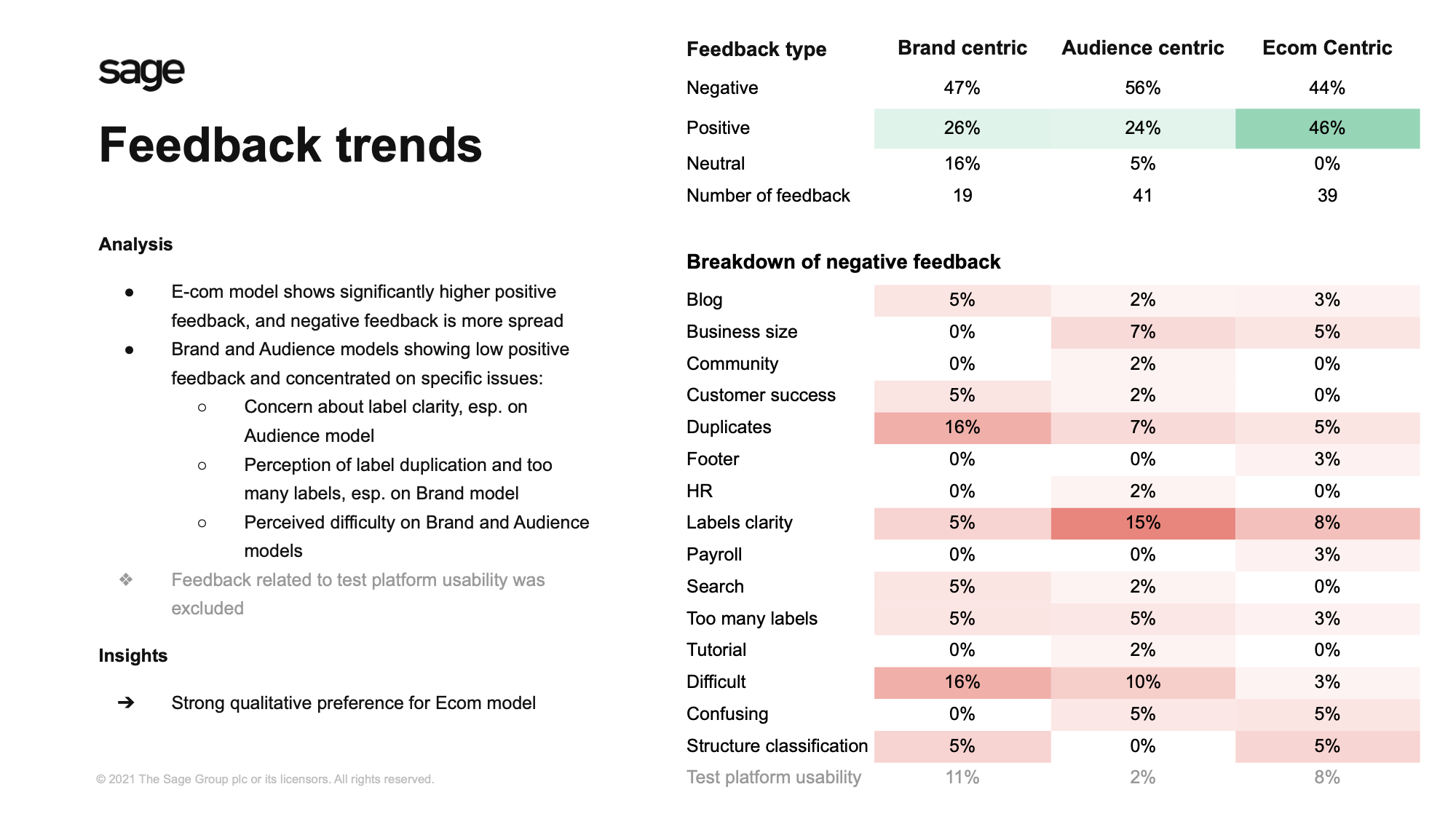
- The E-commerce IA model reached 95% success rate and 83% preferred navigation path
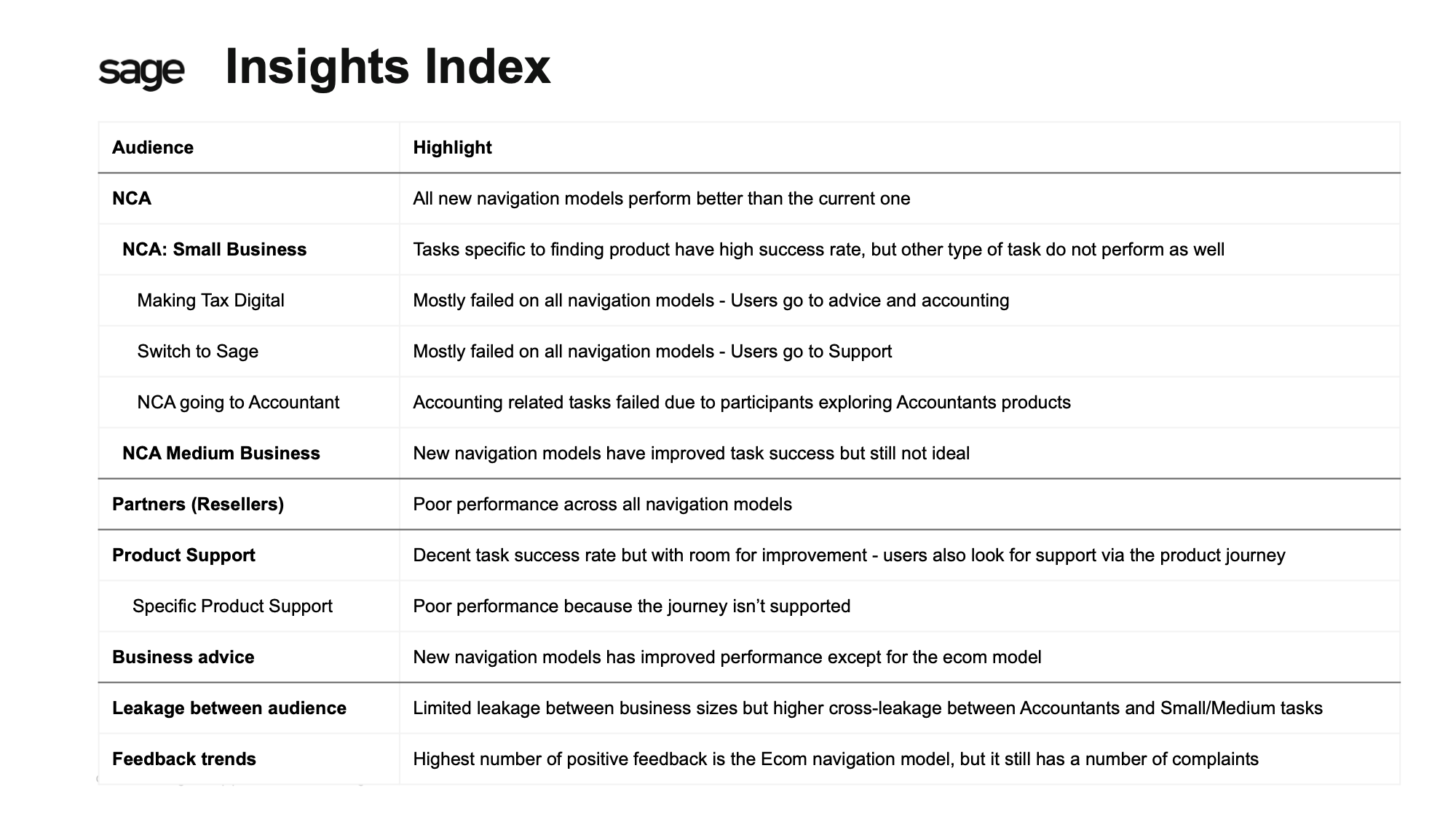
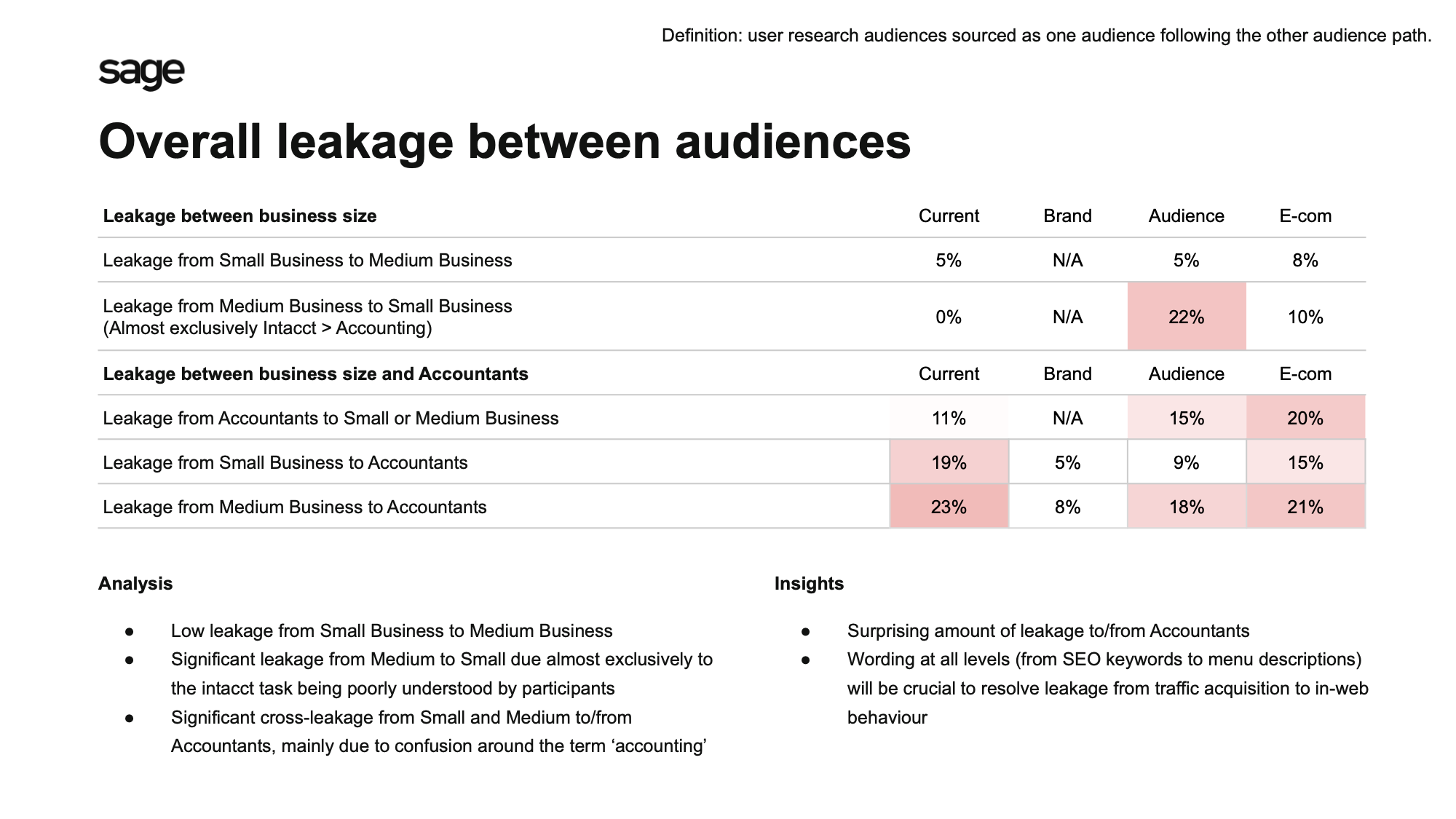
- Important ‘audience leakage’ identified for specific audience segments (e.g. Finance Professionals and Accountants) and between product fundability and business advice content
- Identified specific content improvements necessary for successful key user journeys (e.g. Product Support)
My Role
- I reviewed all past research and data on product findability to ensure past learnings were brought into the process.
- I presented the case and achieved approval of a global navigation project from executive leadership.
- I conducted 16 stakeholder interviews that resulted in 3 unique perspectives from which to look at global navigation, labelled as ‘’Brand’, ‘Evergreen’ and ‘E-commerce’ models.
- I developed a comprehensive and inclusive set of tasks to test for, based on the principal user personas and desired business outcomes for stakeholders—for example, content access, product identification or support.
- I partnered with Content Designers and SEO to produce realistic navigation labels for each of the 3 navigation models, to submit to tree testing against the existing global navigation.
- I produced 3 new complete IA navigation trees, identifying successful task completion criteria as well as preferred navigation paths, to be measured during testing
- I partnered with the Research team to conduct tree testing of 1 existing and 3 new navigation models.
- I partnered with SEO to conduct impression and click testing of all three models
- I conducted in-depth analysis of test results, identifying the key wins, insights and challenges
- I produced comprehensive documentation and an executive summary which highlighted the principal insights and recommendations, with one model as the clear preferred path.
Results and Impact
- All 3 new navigation models performed better than the existing one – up to 90% uplift in successful task completion
- The E-commerce IA model reached 95% success rate and 83% preferred navigation path
- Important ‘audience leakage’ identified for specific audience segments (e.g. Finance Professionals and Accountants) and between product fundability and business advice content
- Identified specific content improvements necessary for successful key user journeys (e.g. Product Support)
Research Review
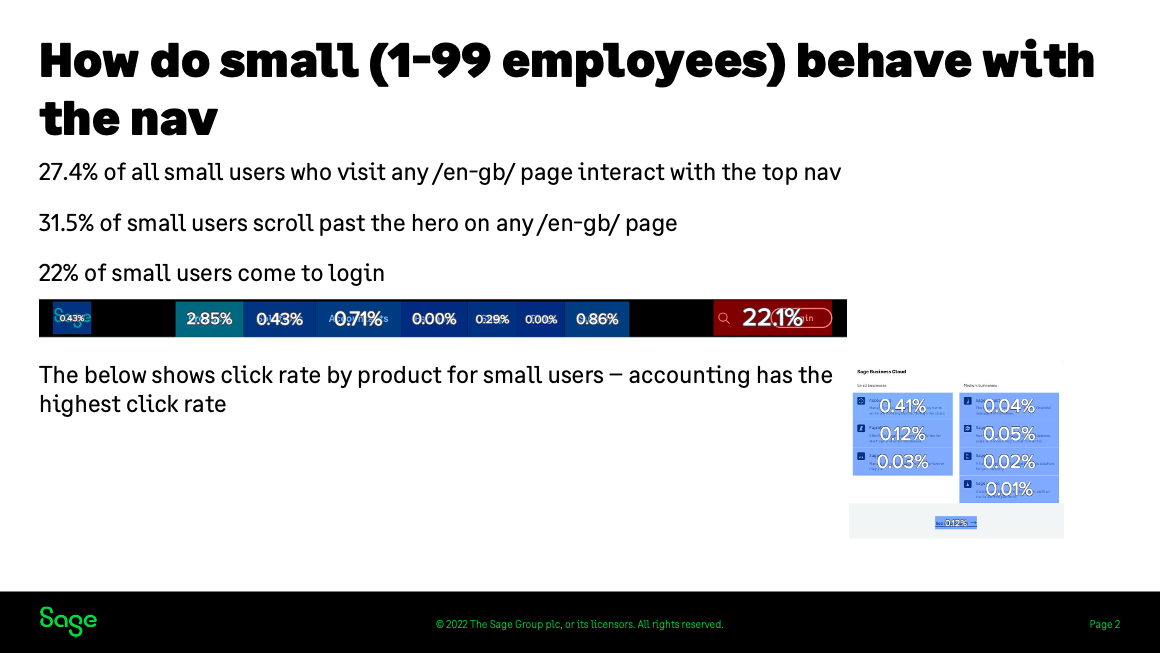
Extensive past research and the most recent research threw light on current usage and primary historical shortcomings.


Research Review
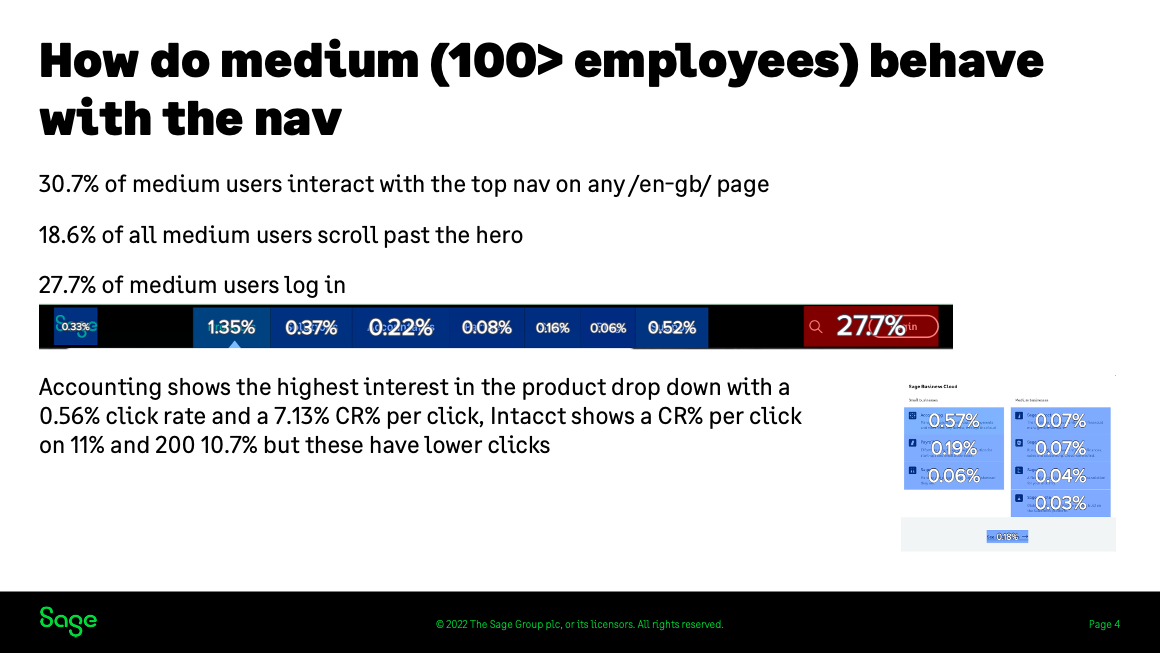
The most recent research threw light on current usage and primary shortcomings.


Three Navigation Models
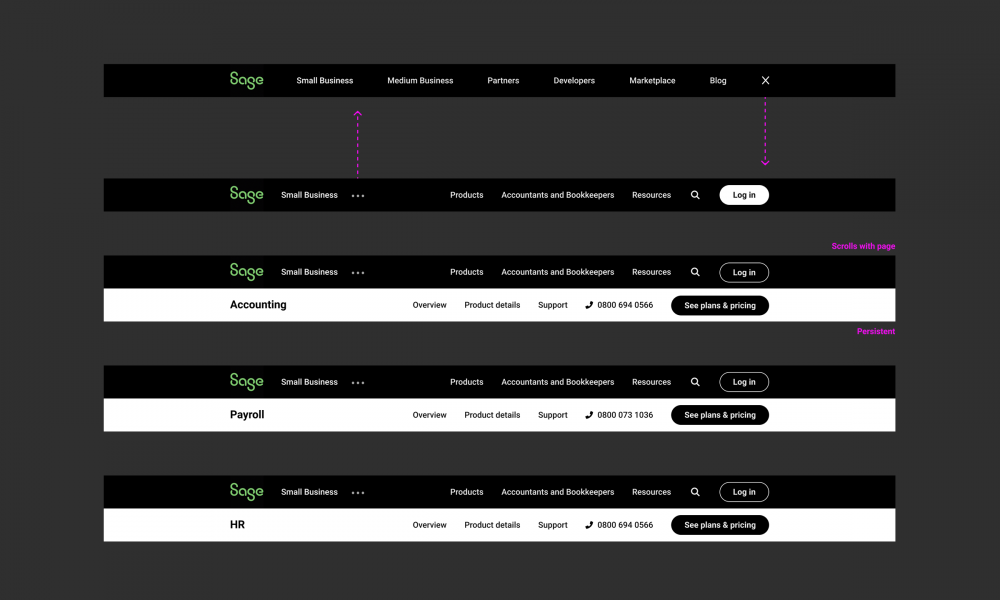
Based on research, analysis, stakeholder interview and IA ideation, three models were chosen as candidates for testing, each with a unique origin and perspective.
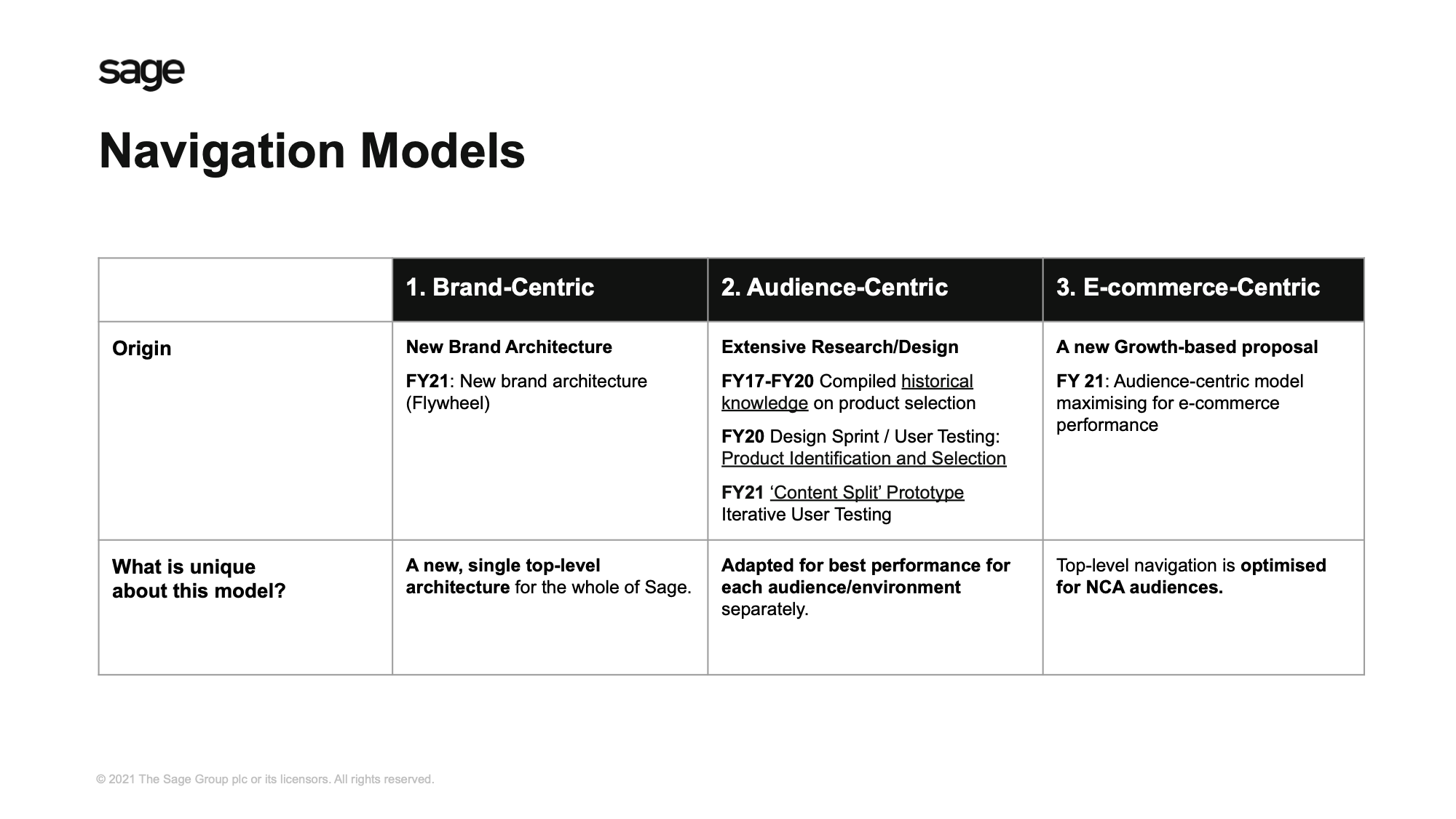
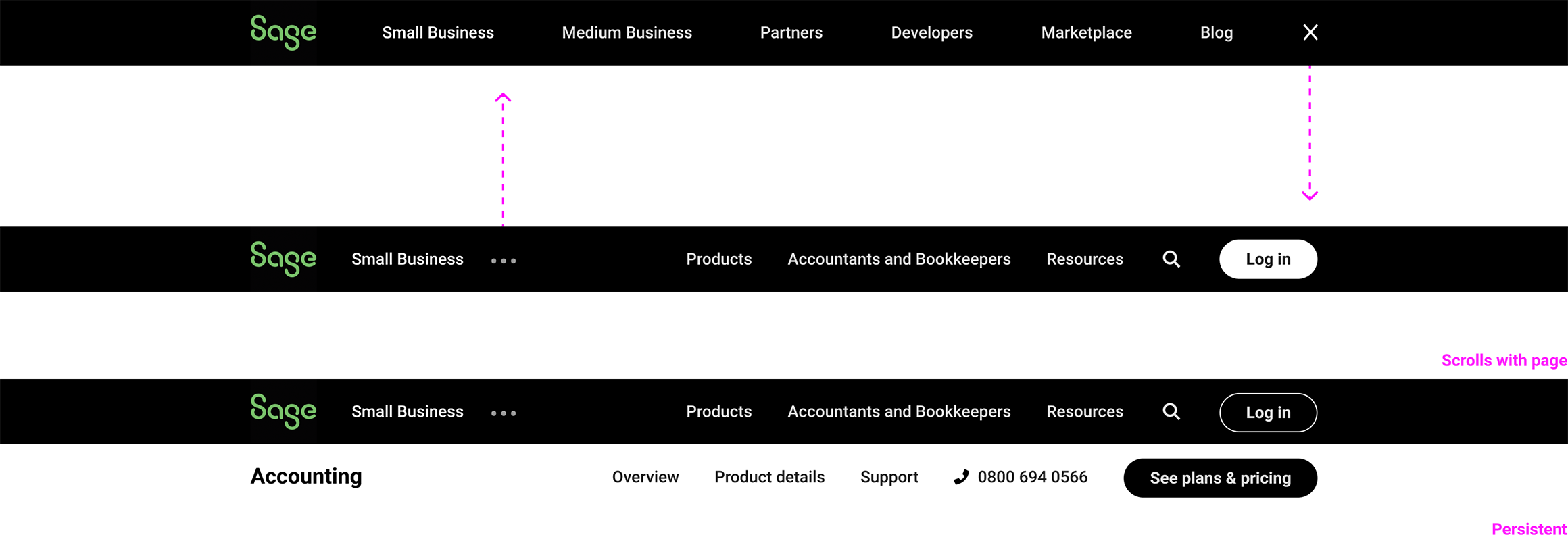
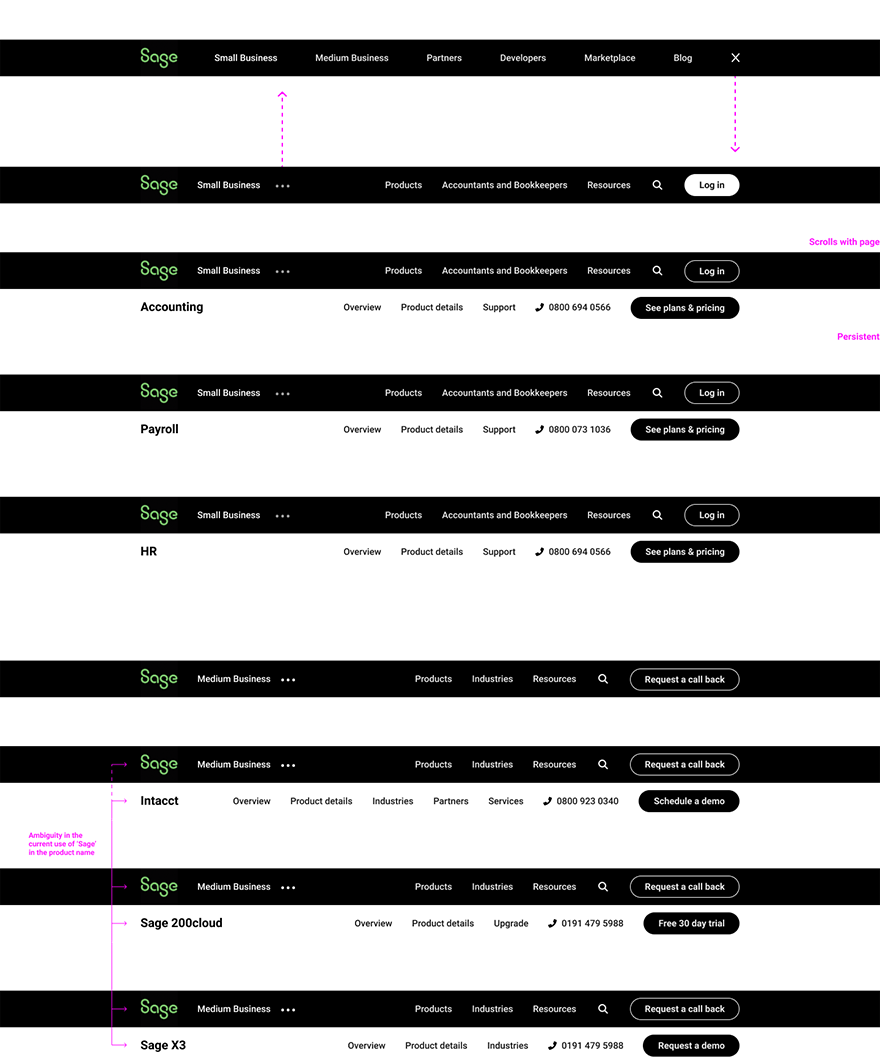
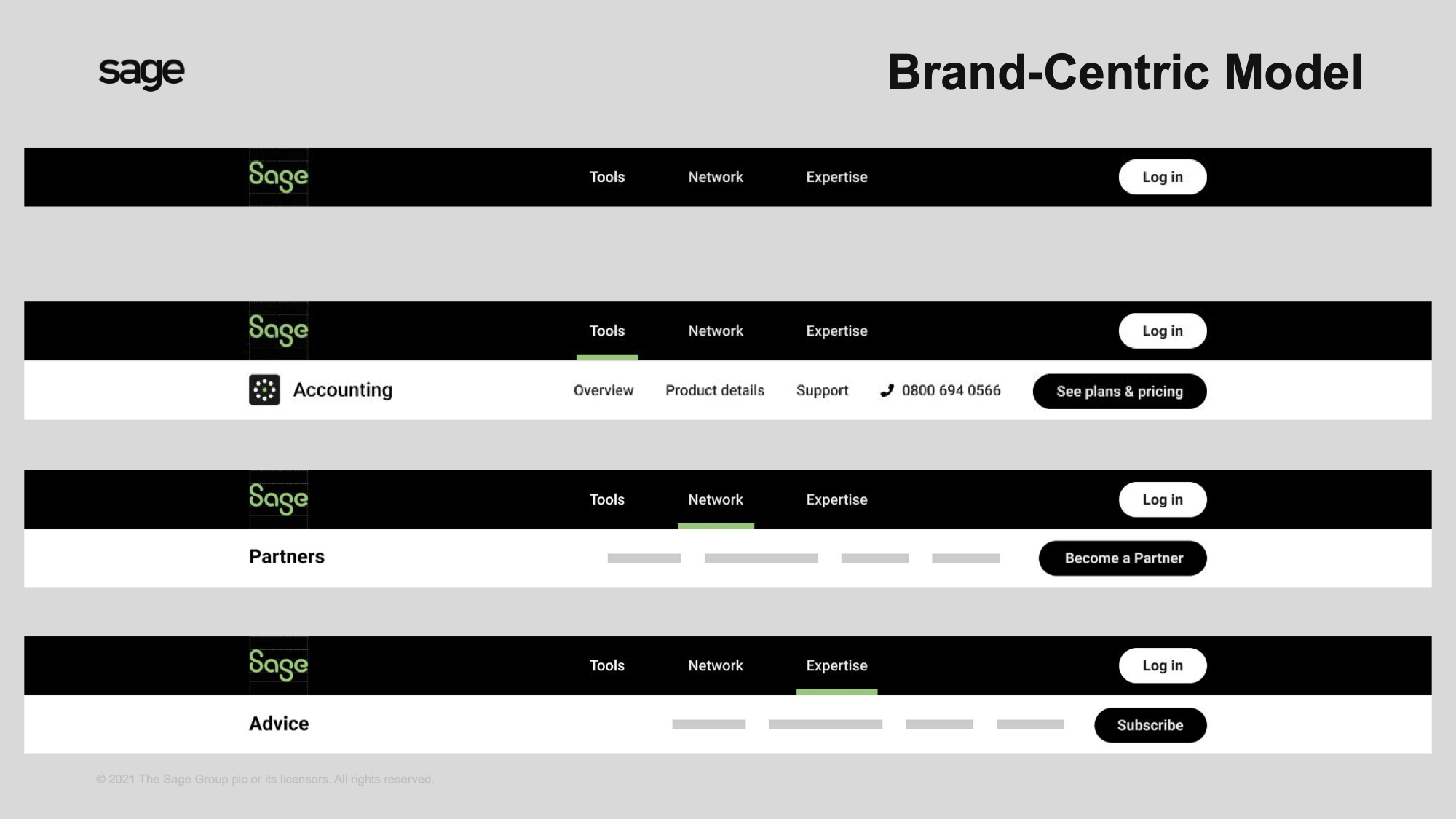
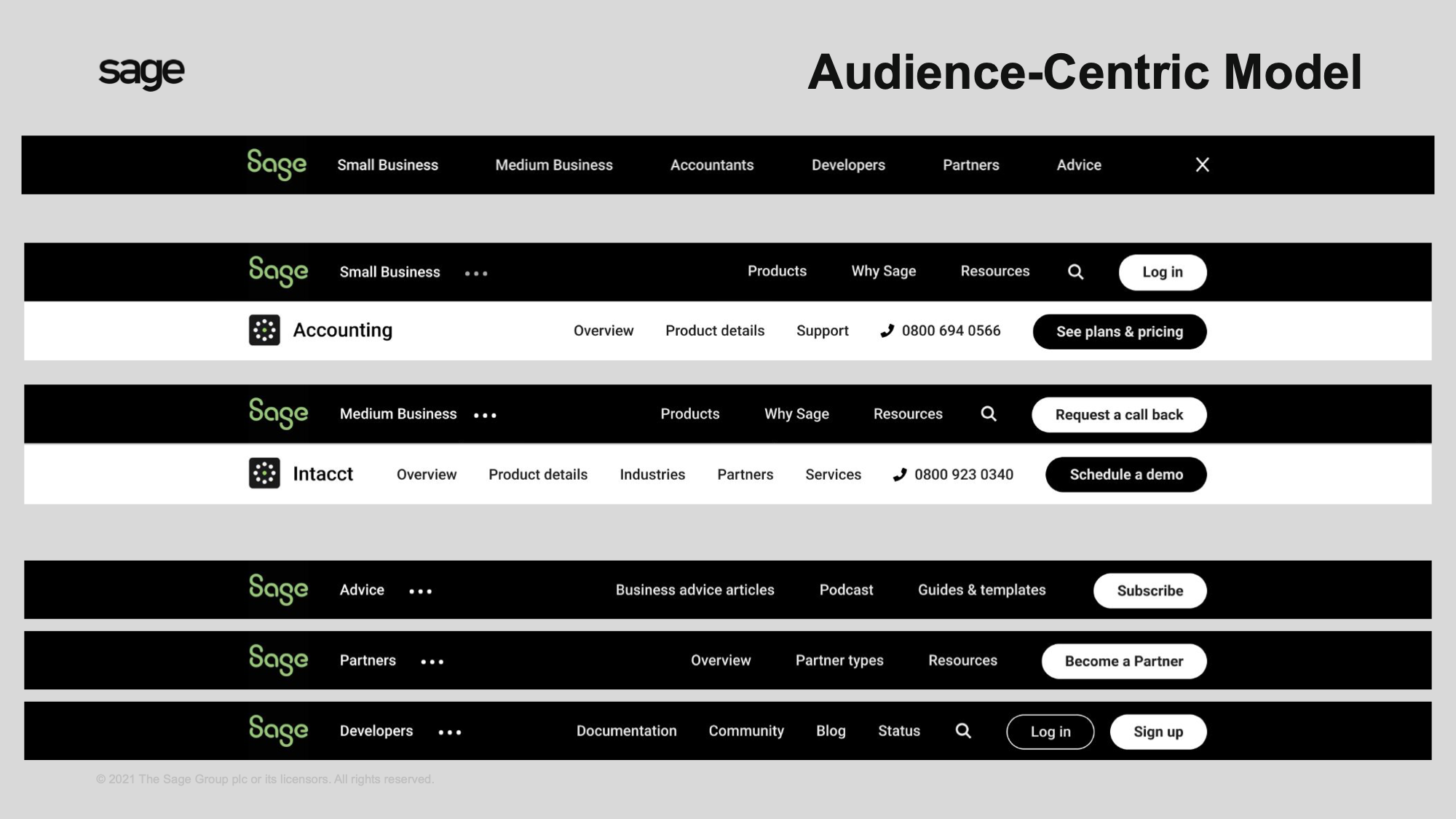
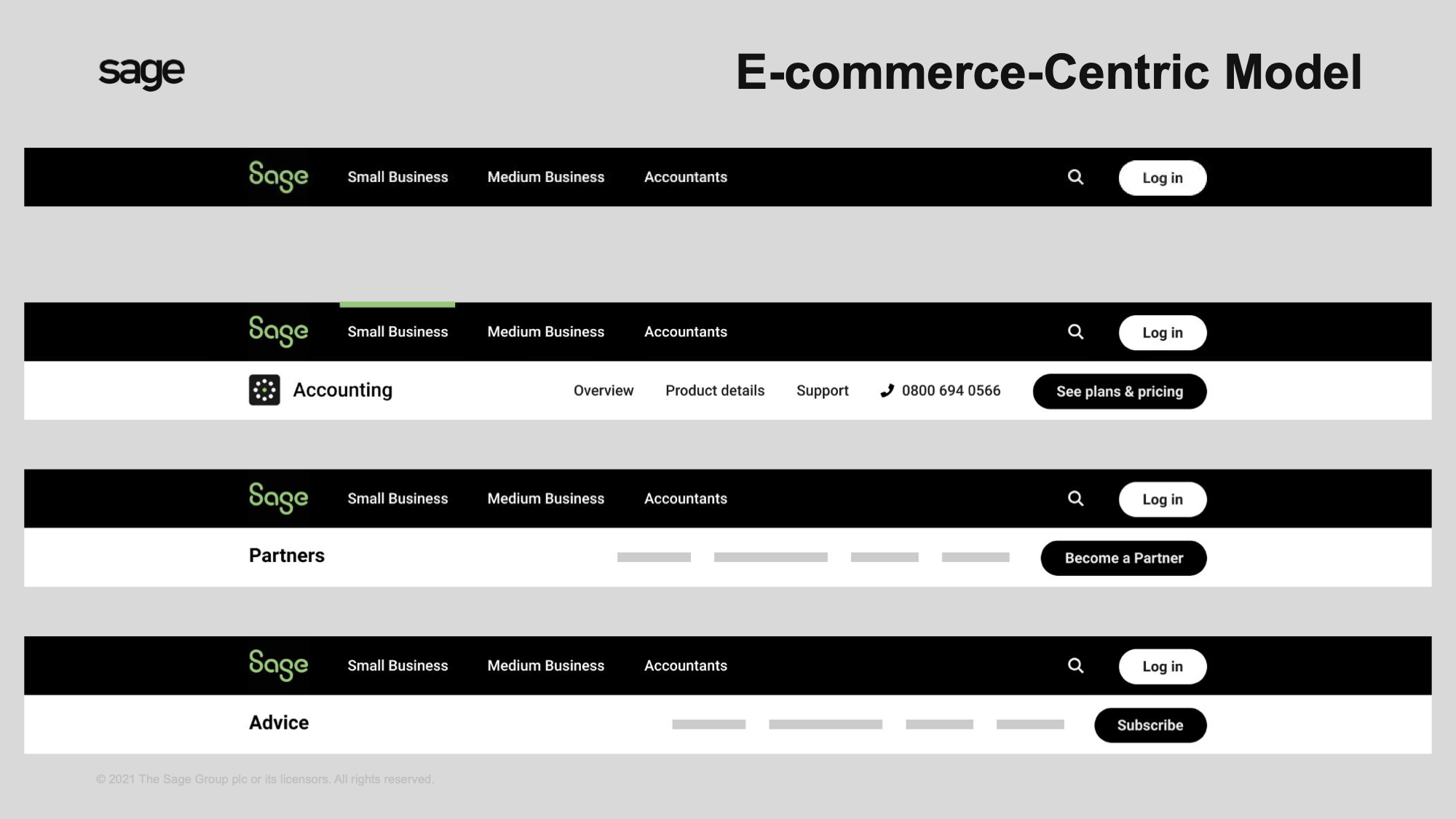
The visual representations below help explain the differences models, but were not used for testing.
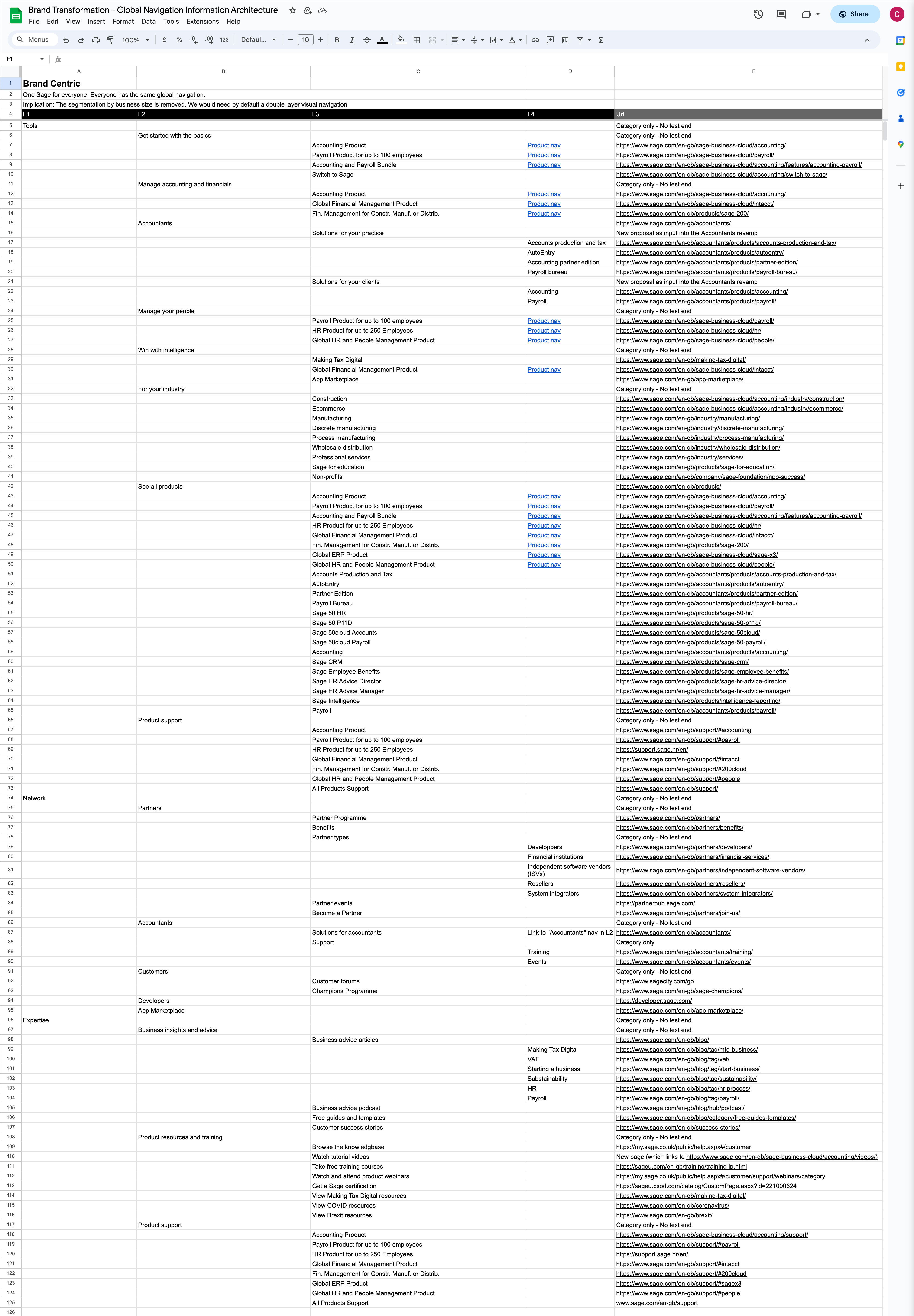
Instead, trees representing user choices at different navigation levels were used to represent mental models—see below.
IA Modelling
Instead of visual representations of navigation, we tested for task success when following a series of hierarchical labels, leading to a destination URL. This way, we could test against the users’ mental models independently from visual design or usability issues.
‘Brand-centric’ Model

Top level labels are:
Tools
Network
Expertse
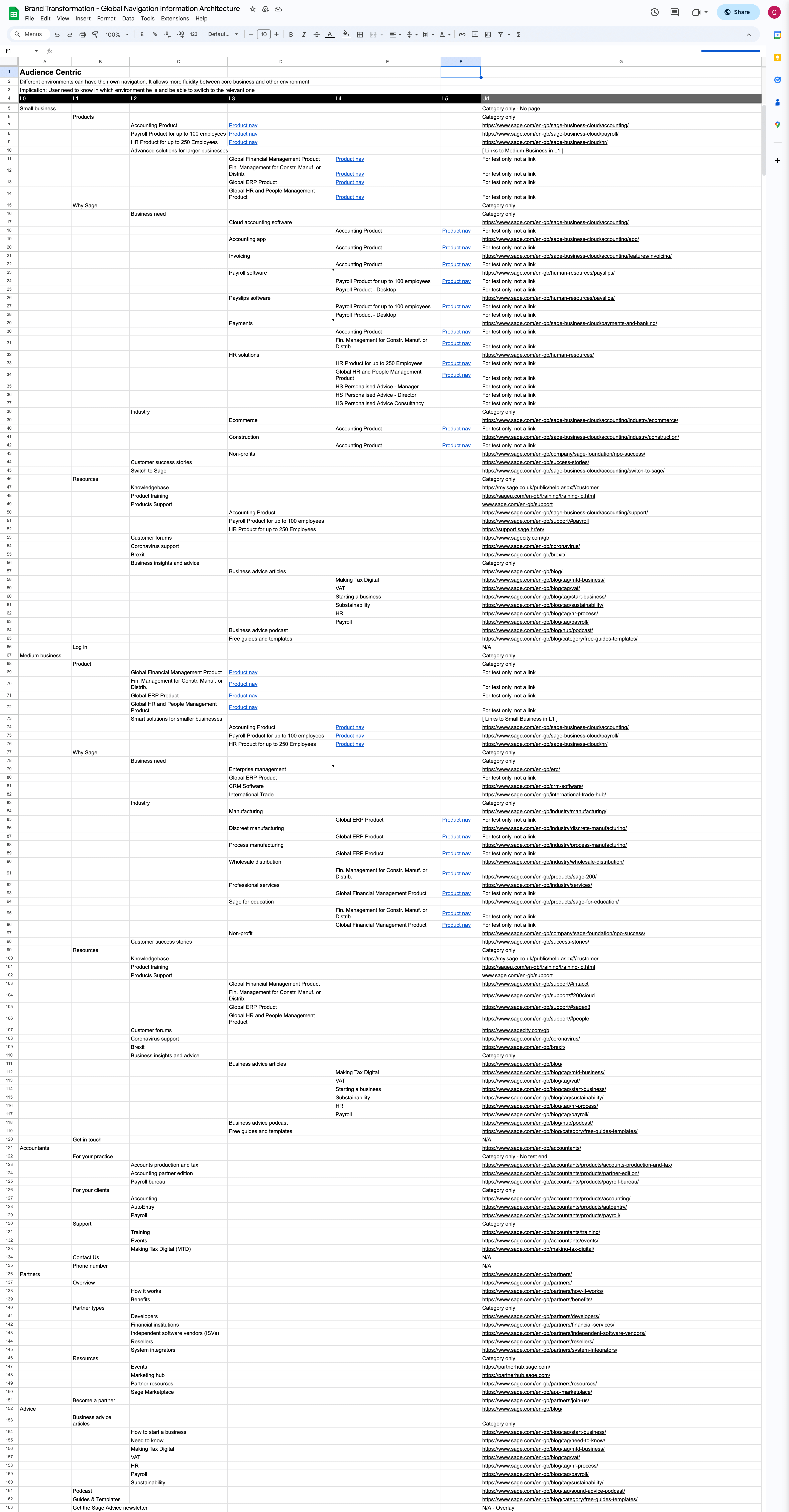
‘Audience-centric’ Model

Top labels are:
Small business
Medium business
Accountants
Partners
Advice
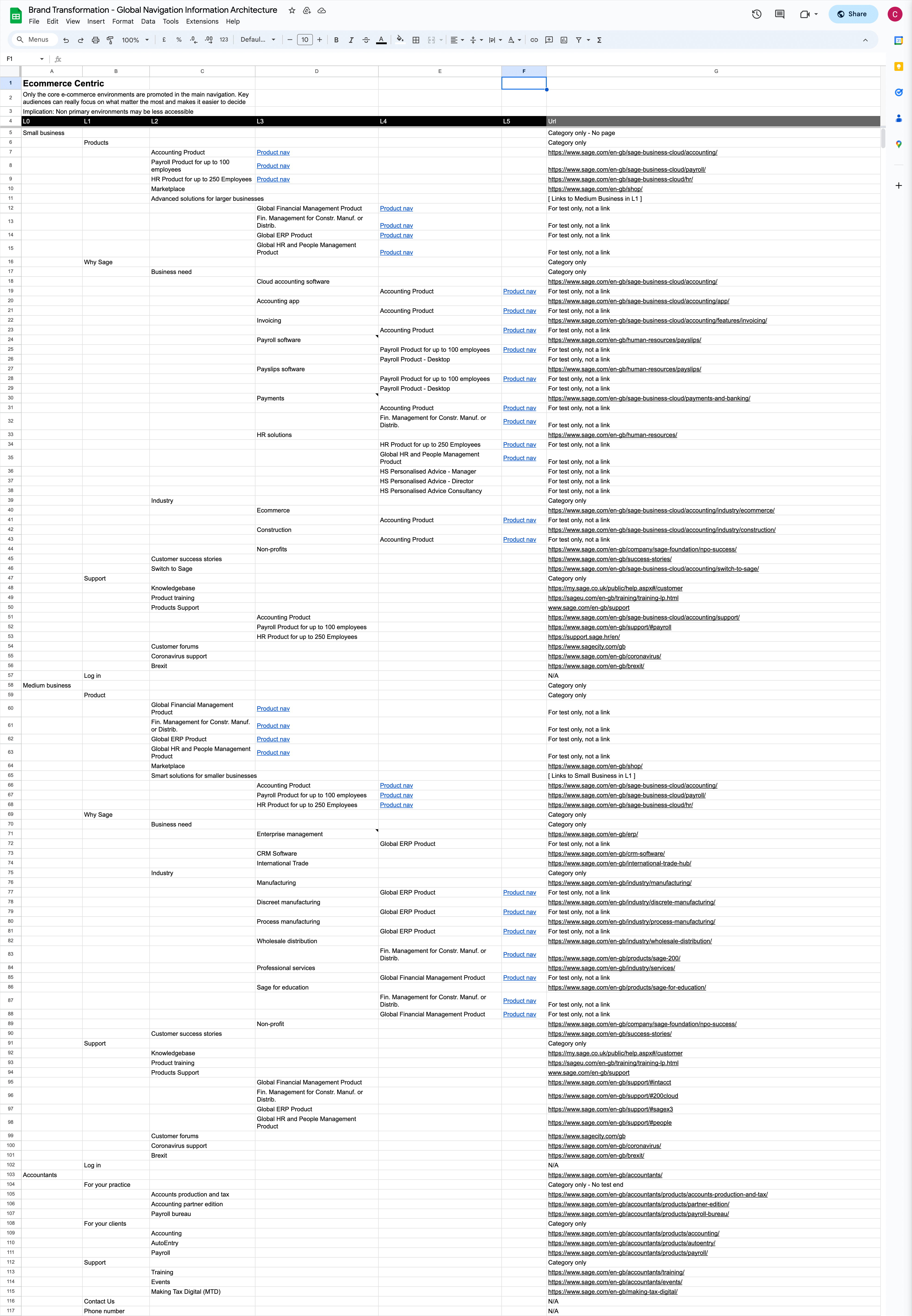
‘E-commerce-centric’ Model

Top labels are:
Small business
Medium business
Accountants

Tree Testing
Instead of visual representations of navigation, we tested for task success when following a series of hierarchical labels, leading to a destination URL. This way, we could test against the users’ mental models independently from visual design or usability issues.
‘Brand-centric’ Model

Top level labels are:
Tools
Network
Expertse
‘Audience-centric’ Model

Top labels are:
Small business
Medium business
Accountants
Partners
Advice
‘E-commerce-centric’ Model

Top labels are:
Small business
Medium business
Accountants
Tree Testing: Tasks
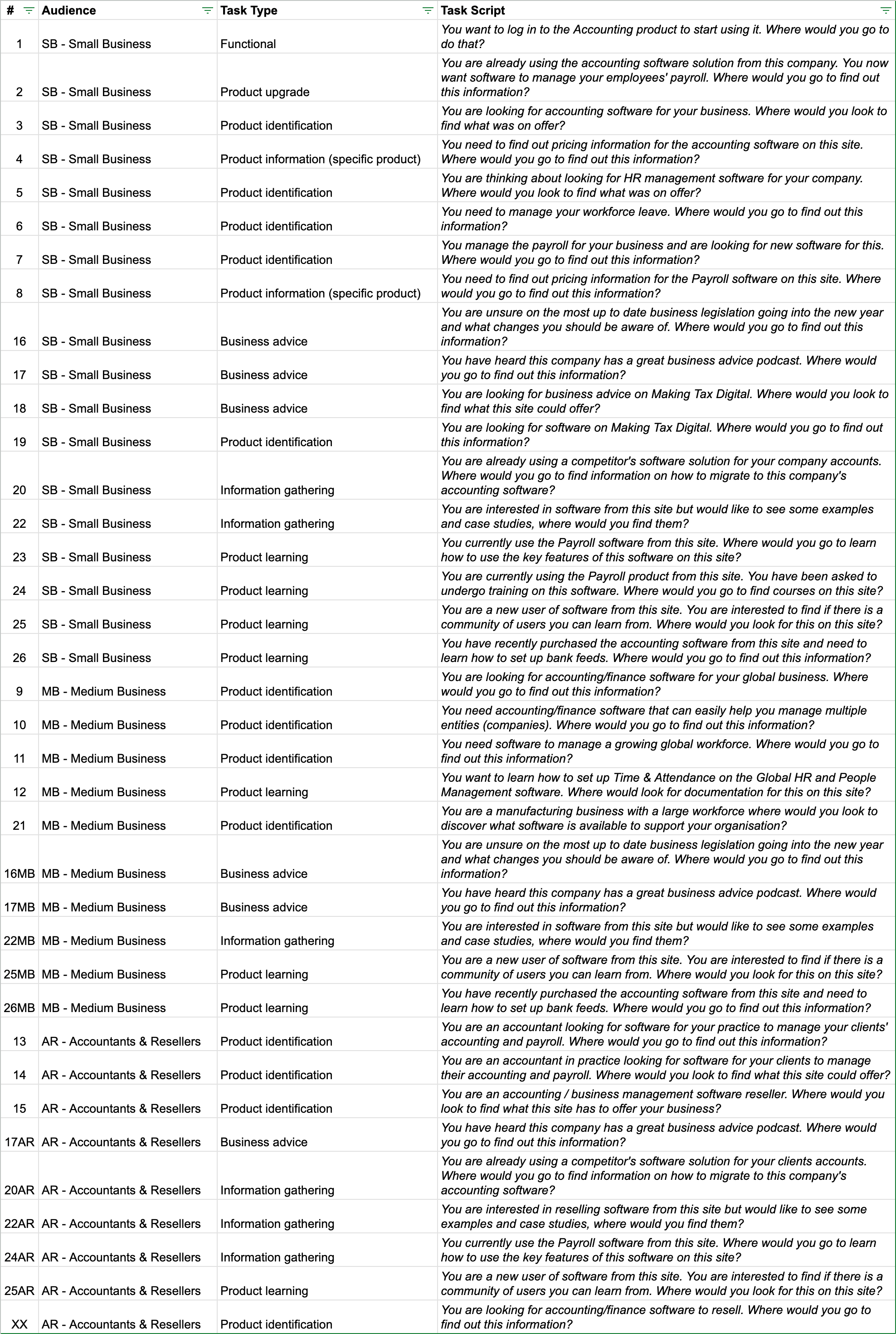
The importance of correct task definition cannot be overstated: their success or failure would determine the way foreward in IA design.
20+ tasks were defined and agreed with stakeholders, which fell into several categories: Product identification, Product learning, Product upgrade, Information gathering and Business advice.
Tree Testing: Methodology
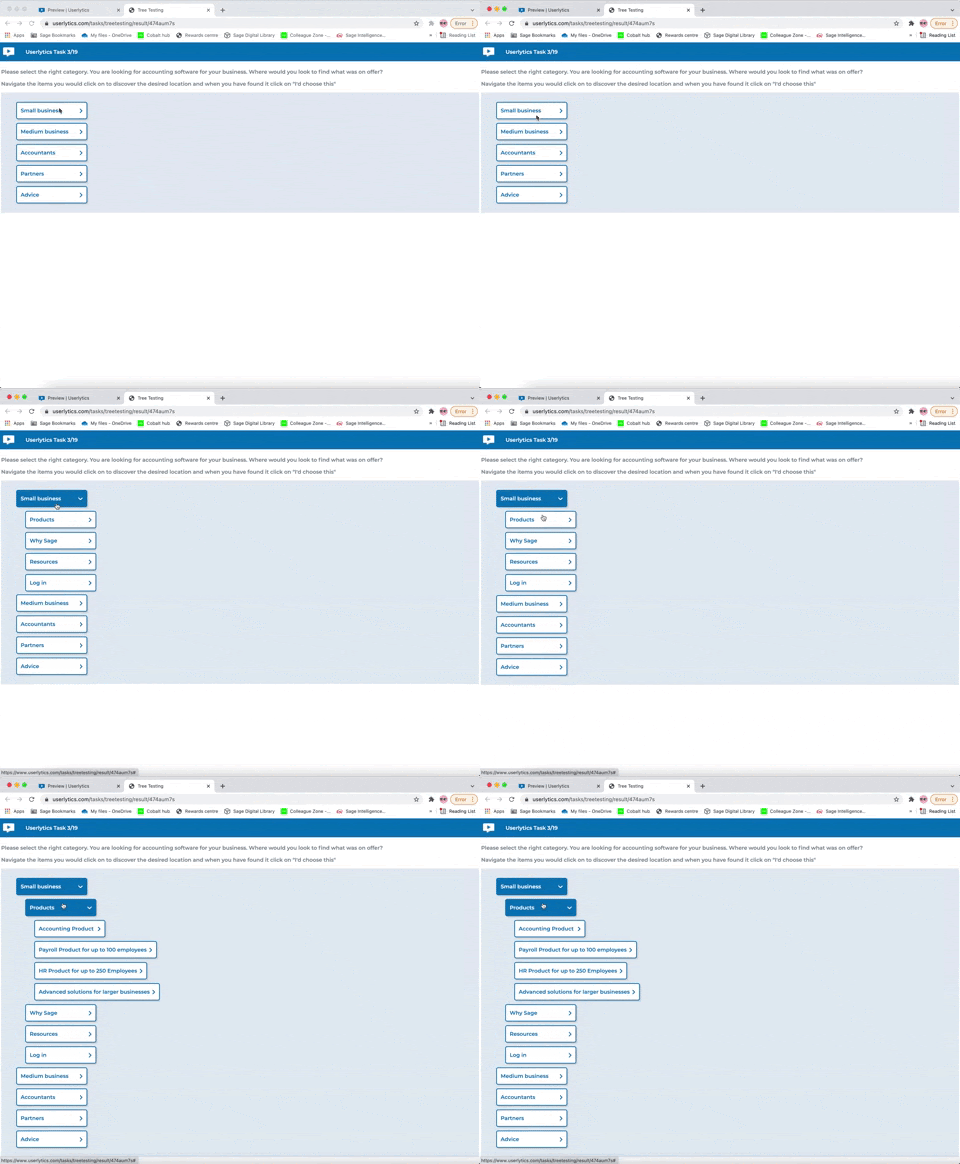
Exploring how each navigation model fits users’ mental model through category tree testing:
- Labels were presented in structures that reflect each navigation model.
- 390 participants from all audiences were asked to complete all relevant tasks. Each participant saw only 1 model.
- Design agnostic: the structure of the test did not represent literal navigation design: different levels did not equate to a new navigation menu opening up. Rather, they represented a hierarchy of information and meaning.
- The output of the test provided insights on the relative success rate of each model in the completion of the tasks.


Exploring how each navigation model fits users’ mental model through category tree testing:
- Labels were presented in structures that reflect each navigation model.
- Tasks were served to each audience against all models (each participant saw 1 model).
- Design agnostic: the structure of the test did not represent literal navigation design: different levels did not equate to a new navigation menu opening up. Rather, they represented a hierarchy of information and meaning.
- The output from the test provided insights on the relative success rate of each model in the completion of the tasks.
Test Results

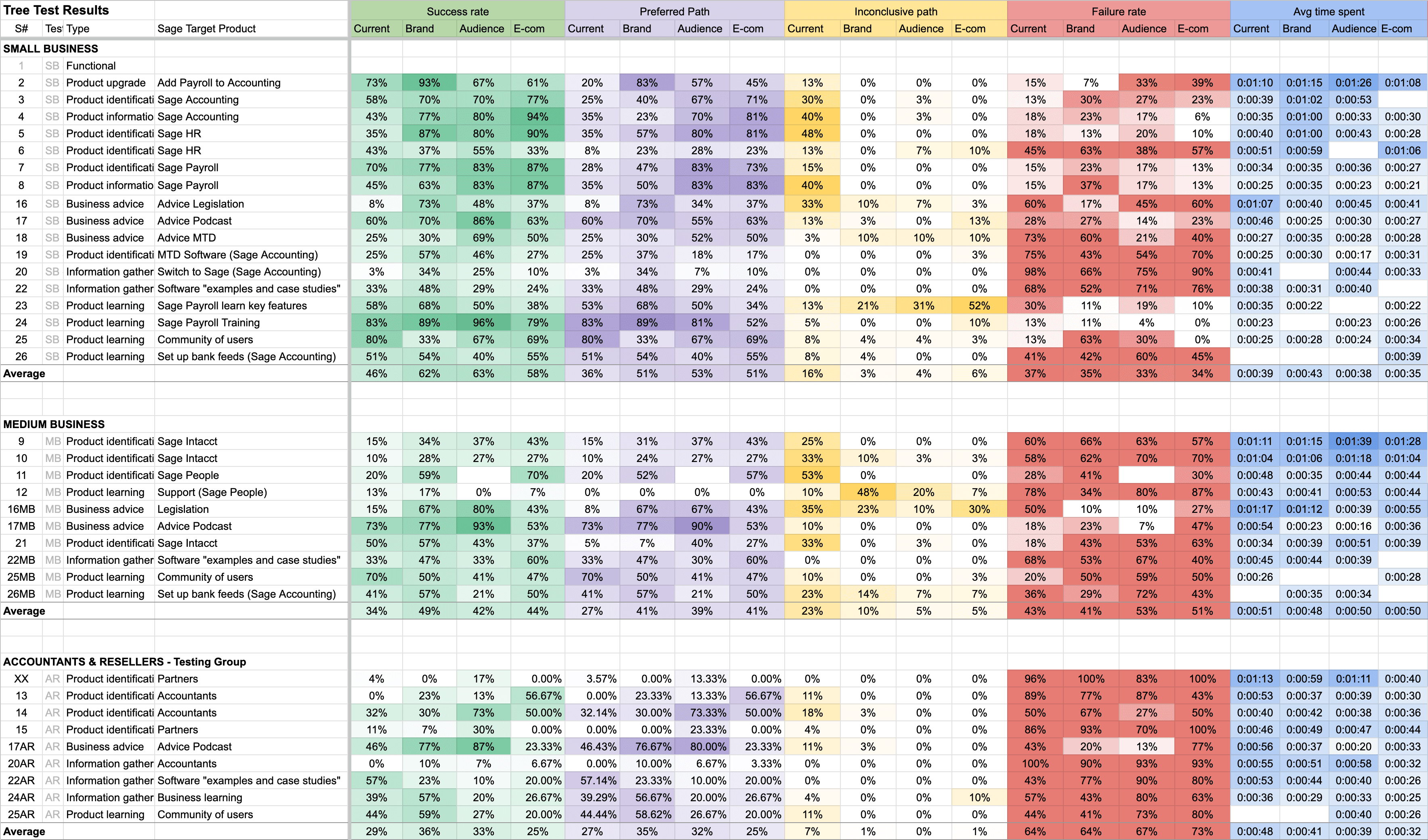
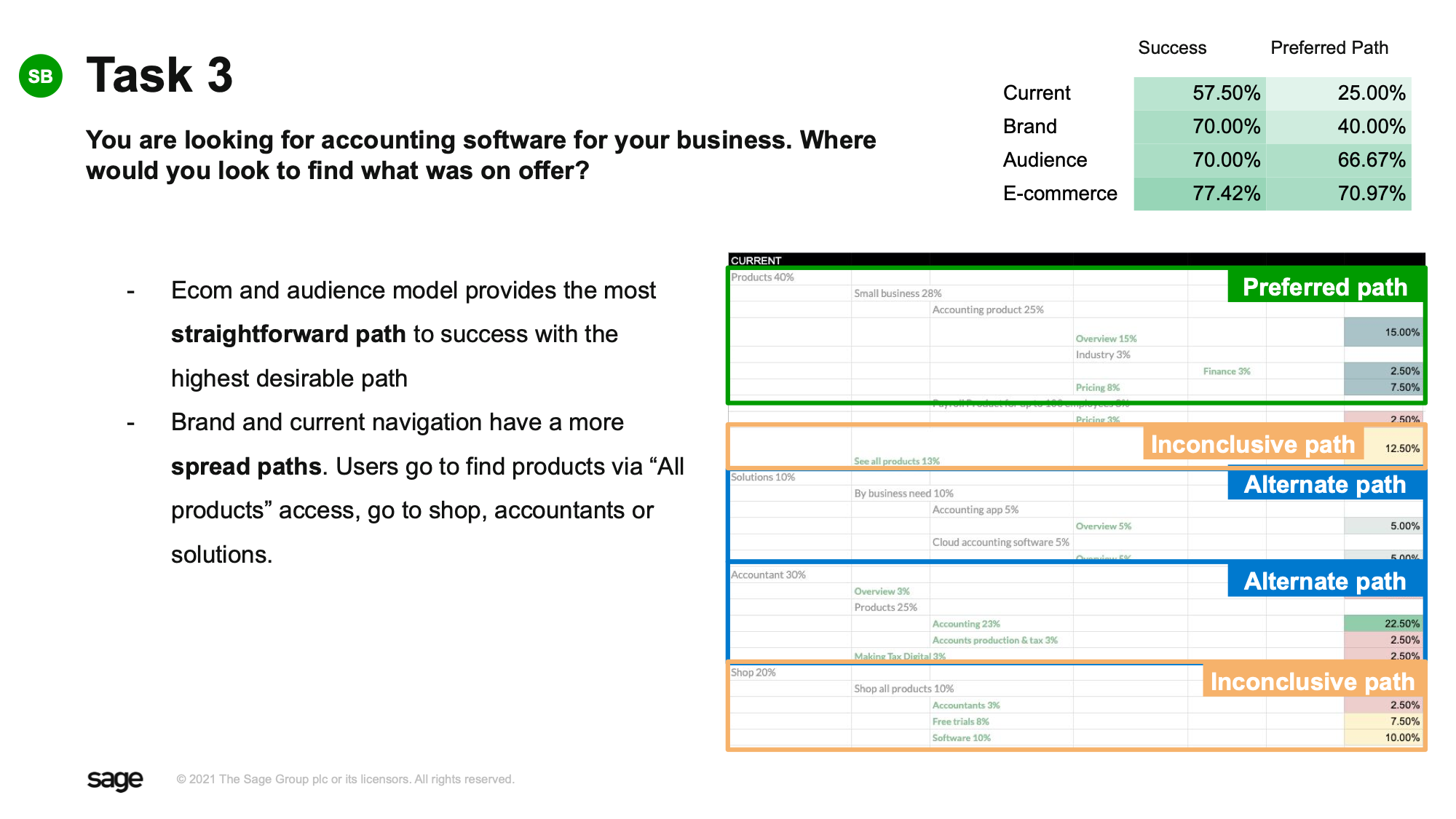
Each one of the 20+ tasks was analysed separately for:
- Task success rate: test subject ended the test at the correct URL
- Preferred success rate: as above, but following the ideal label path
- Inconclusive path: test ended on a location with a possible path for success (not counted as success or failure)
- Failure rate: ended in incorrect URL
- Average time spent on test
- Leakage: tasks leading to the equivalent answer for another audience
Example: Single Task Analysis
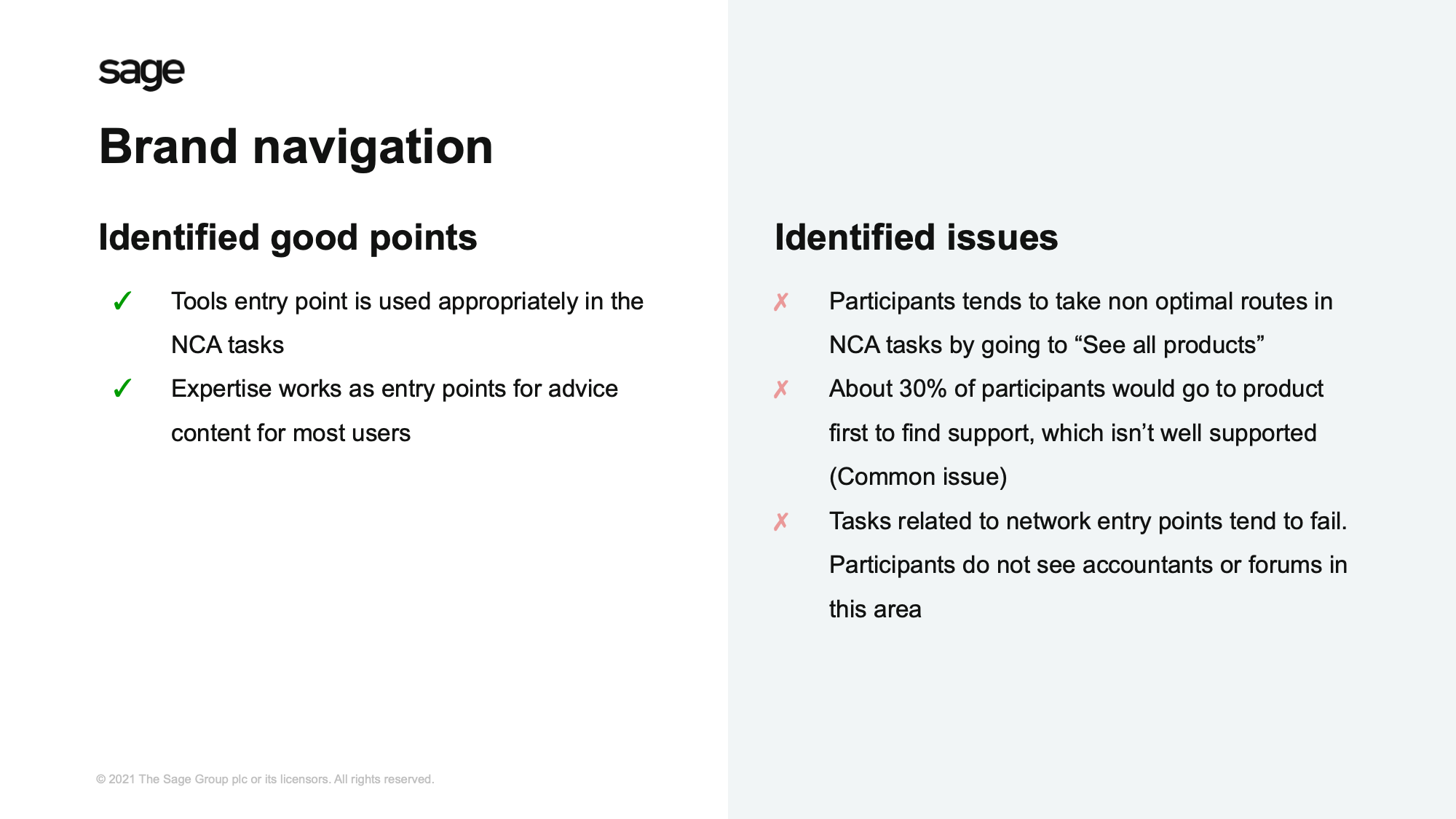
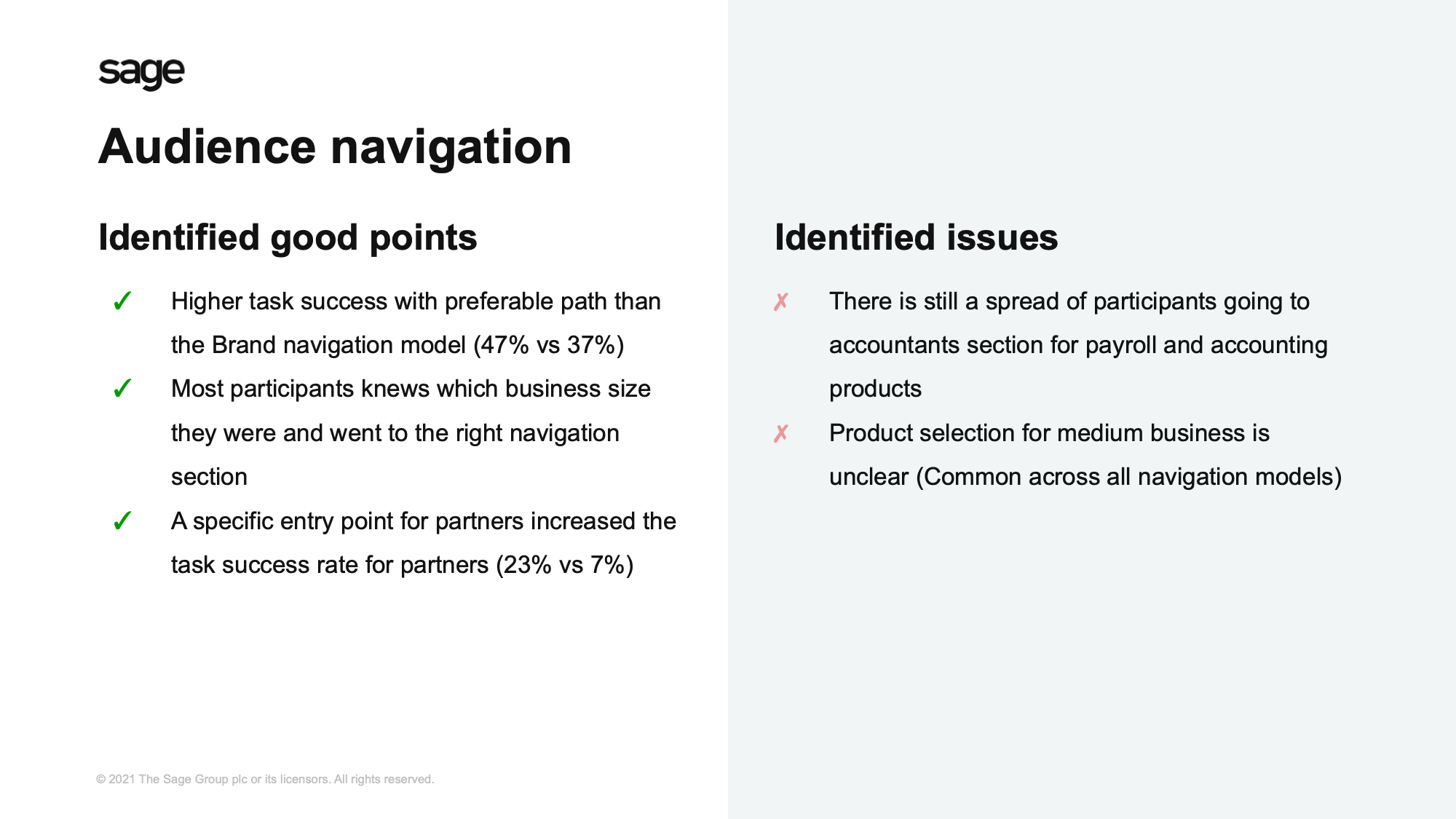
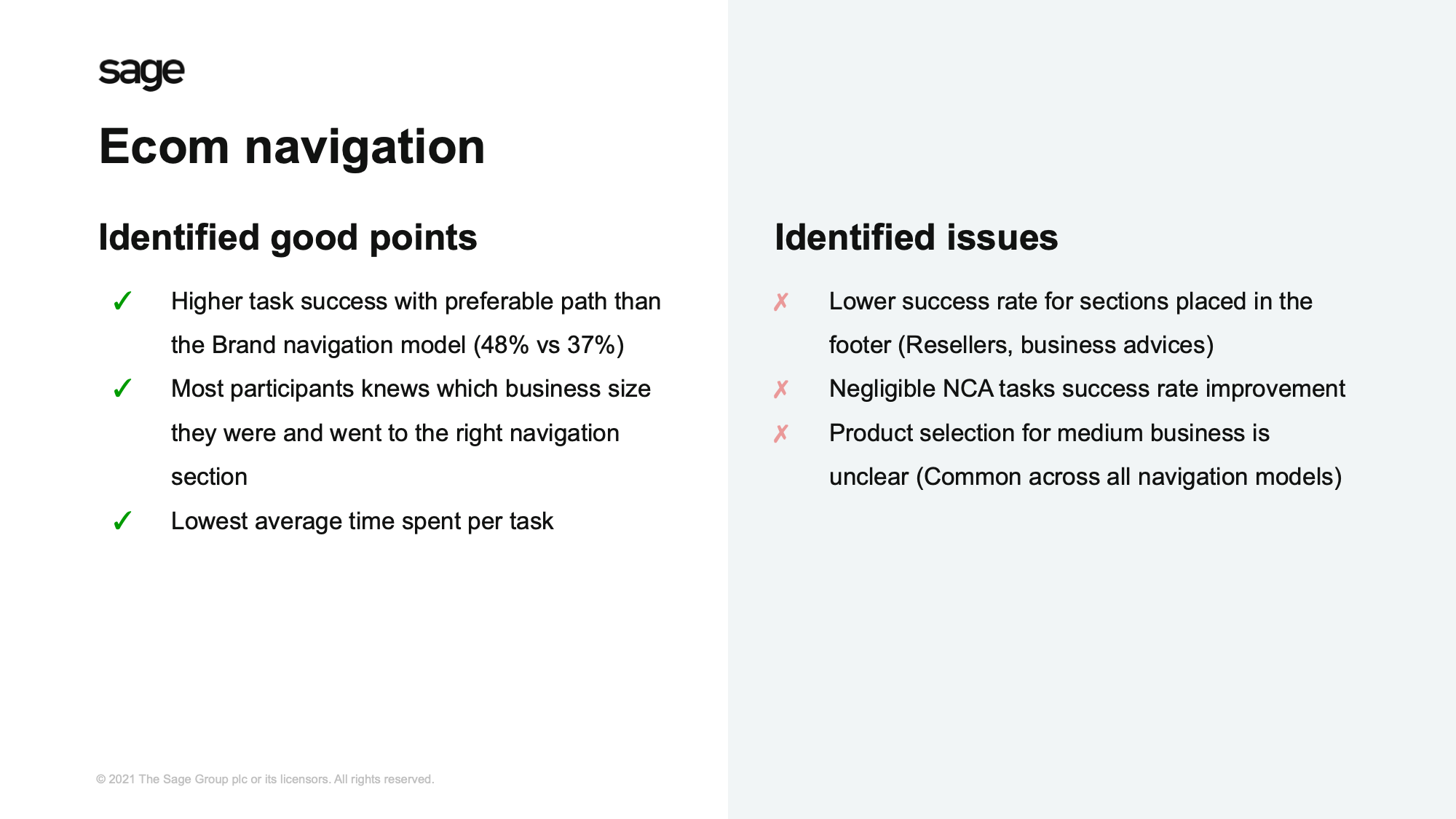
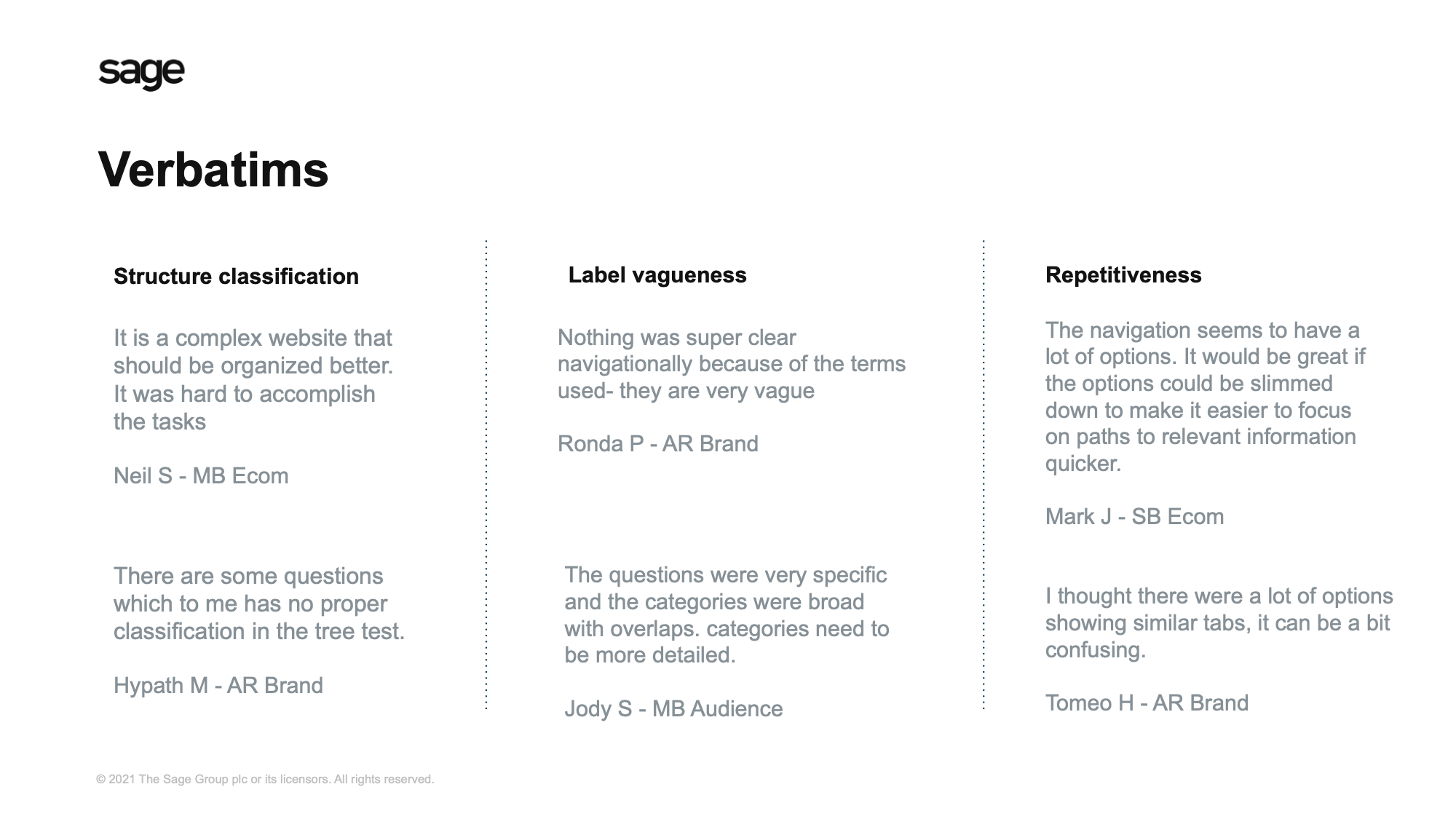
Insights and Recommendations
Below is a sample of the type of insights that the analysis produced.